
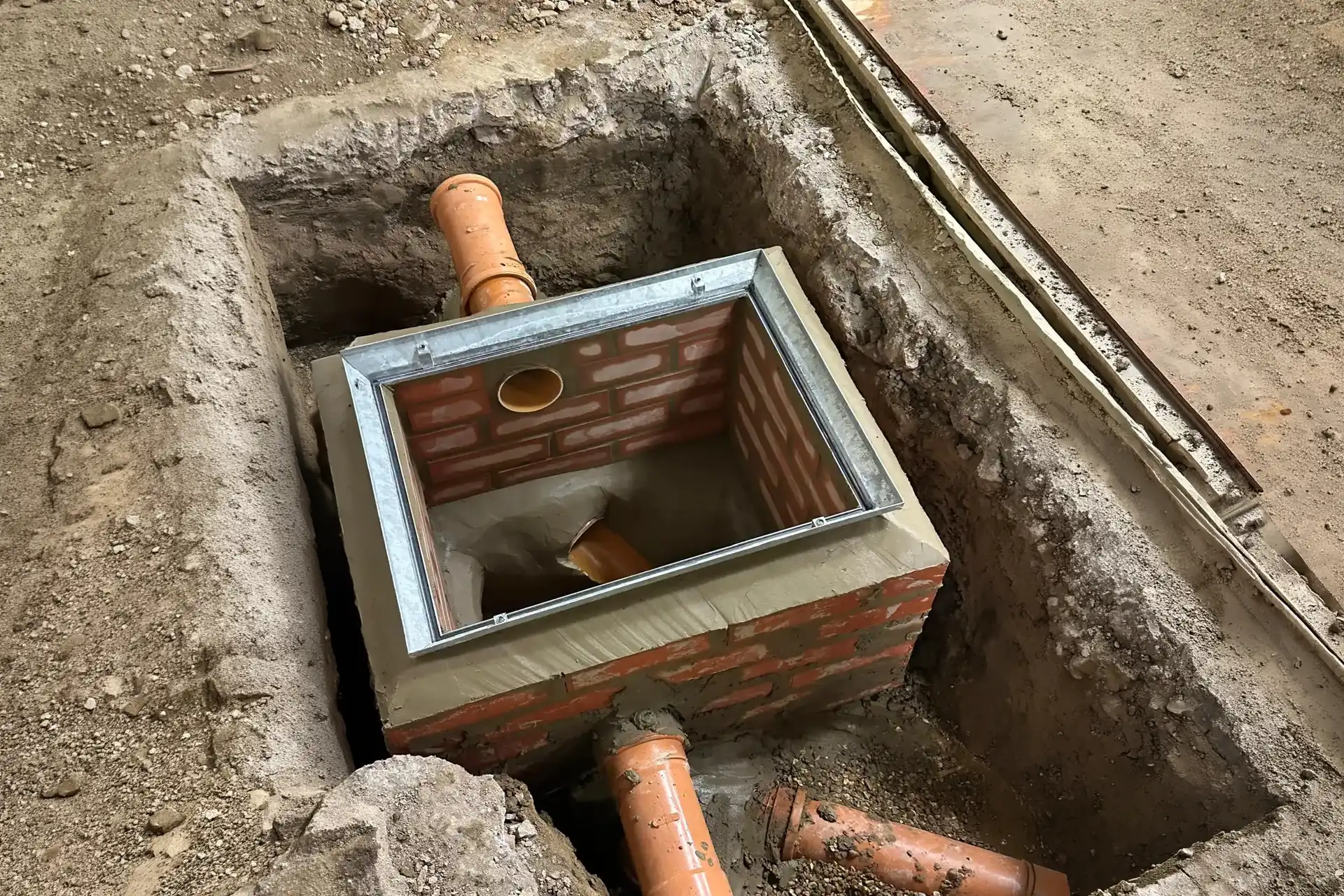
Whether you’re planning a home extension, building a new property, or redesigning your garden, existing drains and sewer pipes can become a major factor in your plans. Many homeowners discover that a drain runs directly through the space where they want to build.
If you live in West Sussex, Horsham, Crawley, Haywards Heath, Worthing, Brighton, Reigate or surrounding areas, understanding the regulations before starting your project can save you thousands in delays, redesign costs, and legal issues.
In many cases, moving a drain is allowed, particularly if it serves only your property.
You may be able to relocate a drain when:
The Drain Is Private – If the drain only carries wastewater from your own property, it is usually classified as a private drain. Private drains can typically be altered or relocated as part of building work.
Examples include:
However, the new pipe route must still comply with UK Building Regulations Part H (Drainage and Waste Disposal).
Even if a drain serves your property only, it must still:
A professional drainage contractor will assess whether relocation is feasible without causing blockages or structural risks.
Some drains cannot simply be moved without approval.
Public Sewers – If the pipe serves multiple properties, it is considered a public sewer.
In the UK, most shared drains became public assets after the 2011 sewer transfer regulations, meaning they are now owned by the local water authority.
In West Sussex and Surrey, this is typically managed by:
If your extension affects a public sewer, you will likely need a:
Build Over Agreement – A Build Over Agreement gives you permission to build near or above a public sewer.
Without it, you may face:
Large sewer pipes often cannot be moved because they serve many properties or carry large volumes of wastewater. In these cases, building designs may need to be adjusted instead.
Drains rely on gravity flow.
If relocating the pipe would create:
Then moving it may not be approved.
Any drainage modification must comply with Building Regulations Part H.
Key requirements include:
Pipes must maintain the correct slope to allow waste to flow efficiently.
Typical gradients:
Manholes or inspection chambers must remain accessible for maintenance.
Pipes beneath buildings must be protected with suitable materials and installation methods.
Local building control must inspect the work to confirm it meets regulations.
Relocating a drain requires careful planning and professional installation.
Here is the typical process.
1. CCTV Drain Survey
A CCTV drainage survey is usually the first step.
This allows drainage specialists to:
This information ensures your plans are accurate and compliant before construction begins.
2. Planning the New Route
Drainage experts will design a new pipe route that:
3. Excavation
The existing drain is exposed through careful excavation.
Old pipe sections are removed and replaced with modern drainage pipes.
4. Installing the New Drain Line
New pipes are installed with:
Inspection chambers may also be repositioned or upgraded.
5. Testing and Approval
Before completion:
This ensures the new system is safe, compliant, and fully functional.
Many homeowners begin building projects without realising a drain runs underneath the site.
This can lead to:
A professional drainage assessment ensures you understand:
A CCTV drainage survey provides clarity before committing to expensive building work.
No. Drain relocation should always be completed by qualified drainage specialists and approved by building control.
DIY alterations can cause:
Costs vary depending on:
Simple relocations may cost a few thousand pounds, while complex projects can be more.
A professional survey provides an accurate estimate.
No.
If the pipe is a public sewer, you must obtain a Build Over Agreement from your water authority before construction.
In many cases, yes.
A CCTV survey identifies hidden drains that could affect your project and ensures compliance with local regulations.
If you’re planning an extension, new build, or renovation project in West Sussex, Horsham, Crawley, Haywards Heath, Reigate or surrounding areas, it’s essential to ensure your drainage system is properly assessed before construction begins.
Professional drainage specialists can provide:
Getting expert advice early can prevent costly delays and ensure your project runs smoothly.
If you’re unsure whether a drain on your property can be moved, the best step is to speak to a professional drainage expert.
A detailed assessment and CCTV drainage survey can provide the answers you need before starting your building project.
Contact Hydra Jetting today for expert advice and a quote.
Our experienced team works with homeowners and developers across:
Hydrating is also expanding its partner network across Sussex and Surrey.
We’re looking to collaborate with:
If you’re looking for a reliable, professional drainage partner for residential or commercial projects, we’d love to hear from you.
Get in touch today to discuss partnership opportunities.
When moving, modifying, or installing drainage systems as part of a home extension, new build, or renovation project, the work must comply with UK Building Regulations Part H. This section of the building regulations covers drainage, waste disposal, and rainwater systems, ensuring that wastewater is safely and effectively removed from properties without causing environmental or structural problems.
For homeowners and developers in West Sussex or Surrey and surrounding areas, compliance with Part H is essential when altering any underground drainage connected to your property.
What Does Building Regulations Part H Cover?
Part H focuses on the safe design and installation of drainage systems. It ensures that waste from toilets, kitchens, bathrooms, and rainwater systems is properly managed and transported away from the property.
Key areas covered include:
These regulations help prevent common issues such as blockages, foul odours, flooding, and contamination of groundwater.
Pipe Gradients and Drainage Flow
One of the most important requirements under Part H is ensuring that drainage pipes have the correct gradient (fall) so wastewater flows efficiently through the system.
Typical guidance includes:
If a pipe is too flat, waste can accumulate and cause blockages. If it is too steep, liquids may flow too quickly, leaving solids behind.
Inspection Chambers and Access
Part H also requires that drainage systems include accessible inspection chambers or manholes. These allow drainage specialists to:
When moving a drain as part of a building project, inspection chambers may need to be relocated or upgraded to maintain safe access.
Drainage Beneath Buildings
If a drain runs underneath a structure such as an extension, Part H requires that the pipe is adequately protected and accessible.
This may involve:
In cases where the pipe is a public sewer, you may also need a Build Over Agreement from your water authority before building work can proceed.
Why Building Control Approval Is Required
Any work involving drainage modifications must usually be inspected and approved by local building control authorities. This ensures the system has been installed correctly and complies with Part H regulations.
Without proper approval, homeowners may face:
Getting Professional Advice Before Moving a Drain
Because drainage regulations can be complex, it is always recommended to consult professional drainage specialists before starting building work.
A CCTV drainage survey can help identify pipe routes, confirm ownership (private or public), and determine whether the drainage layout complies with Part H requirements.
If you’re planning a project in West Sussex, Horsham, Crawley, Haywards Heath, Reigate, or nearby areas, seeking expert advice early can ensure your drainage system is designed correctly and fully compliant with UK building regulations.
If you’re planning an extension, new build, or major renovation and there is a public sewer running under or close to your property, you may need something called a Build Over Agreement before construction can begin.
A Build Over Agreement is formal permission from the local water authority allowing you to build over or within a specified distance of a public sewer. These agreements ensure that any building work does not damage the sewer system or prevent access for future maintenance.
For properties in West Sussex, Horsham, Crawley, Haywards Heath, Reigate, and surrounding areas, the relevant water authorities are typically Southern Water or Thames Water, depending on the location.
Why Build Over Agreements Exist
Public sewers are critical infrastructure that serve multiple homes and businesses. Water companies must ensure that new construction does not:• Damage existing sewer pipes
• Prevent access for repairs or maintenance
• Increase the risk of blockages or flooding
• Cause structural pressure on drainage systems
A Build Over Agreement ensures your project is designed safely while protecting the public sewer network.
When You Need a Build Over Agreement
You will usually need a Build Over Agreement if:
• A public sewer runs beneath your proposed extension or building
• Your building work is within 3 metres of a public sewer
• The drain serves multiple properties, not just your own
• You plan to alter or relocate part of the sewer system
If the pipe only serves your property and is classified as a private drain, a Build Over Agreement is usually not required, although Building Regulations will still apply.
How the Build Over Agreement Process Works
The process generally involves several steps:
1. Drainage Survey
A CCTV drainage survey is typically required to identify the location, size, and condition of the sewer.
2. Application to the Water Authority
Plans of your proposed building work are submitted to the water company, showing how the sewer will be protected.
3. Design Review
The water authority reviews the design to ensure:
• The sewer remains structurally protected
• There is adequate access for maintenance
• The building does not place excessive load on the pipe
4. Approval and Construction
Once approved, construction can proceed following the agreed guidelines. Inspections may take place during the work.
What Happens If You Build Without One?
Building over a public sewer without permission can create serious problems later.
Potential consequences include:
• Legal enforcement by the water authority
• Problems when selling your property
• Mortgage or conveyancing delays
• Being required to alter or remove the structure
This is why identifying drainage early in the planning process is so important.
Why a Drainage Survey Is Important
Many homeowners are unaware that a sewer runs beneath their property until building work begins.
A professional CCTV drainage survey can:
• Locate hidden drains and sewers
• Confirm whether pipes are public or private
• Identify structural issues
• Help determine whether a Build Over Agreement is required
For homeowners and developers in Sussex and Surrey, getting expert drainage advice before starting a project can prevent costly delays and ensure your plans comply with all regulations.
Others |
|
| Other uncategorized cookies are those that are being analyzed and have not been classified into a category as yet. | |
Necessary |
Necessary |
| Necessary cookies are absolutely essential for the website to function properly. These cookies ensure basic functionalities and security features of the website, anonymously. | |
Advertisement |
|
| Advertisement cookies are used to provide visitors with relevant ads and marketing campaigns. These cookies track visitors across websites and collect information to provide customized ads. | |
Analytics |
|
| Analytical cookies are used to understand how visitors interact with the website. These cookies help provide information on metrics the number of visitors, bounce rate, traffic source, etc. | |
Functional |
|
| Functional cookies help to perform certain functionalities like sharing the content of the website on social media platforms, collect feedbacks, and other third-party features. | |
Performance |
|
| Performance cookies are used to understand and analyze the key performance indexes of the website which helps in delivering a better user experience for the visitors. | |
This website uses cookies to improve your experience while you navigate through the website. Out of these, the cookies that are categorized as necessary are stored on your browser as they are essential for the working of basic functionalities of the website. We also use third-party cookies that help us analyze and understand how you use this website. These cookies will be stored in your browser only with your consent. You also have the option to opt-out of these cookies.